Palm Springs Desert Modern Homes: A Design‑Savvy Guide
March 5, 2026
March 5, 2026
Does the sight of a low roofline framing blue pool water and San Jacinto peaks make your heart skip a beat? If you love clean geometry, breeze‑block shadows, and walls of glass, you’re in the right place. This guide will help you spot the hallmarks of Palm Springs desert modern homes, know what to check on a viewing, plan upgrades that respect the architecture, and stage your space so it shines. Let’s dive in.
Palm Springs and the greater Coachella Valley hold one of the richest concentrations of mid‑century and desert modern homes in the country. That design heritage fuels travel, tours, and an active preservation culture that keeps the style vibrant today. You can get a quick overview of the local scene in this survey of Palm Springs modernism and its signature features from the Eichler Network.
If you want to see the architecture up close, schedule a visit to the Palm Springs Art Museum’s Architecture & Design Center. The museum’s programs and exhibitions offer guided ways to understand how these homes were designed and built. You can also explore local historic designation and preservation activity through the Palm Springs Modern Committee, which documents landmarks and helps owners navigate designation.
Local legends like Albert Frey, Richard Neutra, E. Stewart Williams, Donald Wexler, and William Krisel shaped the look you see across the valley. Their work ranges from custom architect homes to entire modern tracts, which helped bring good design to everyday buyers and still sets the tone for desert living.
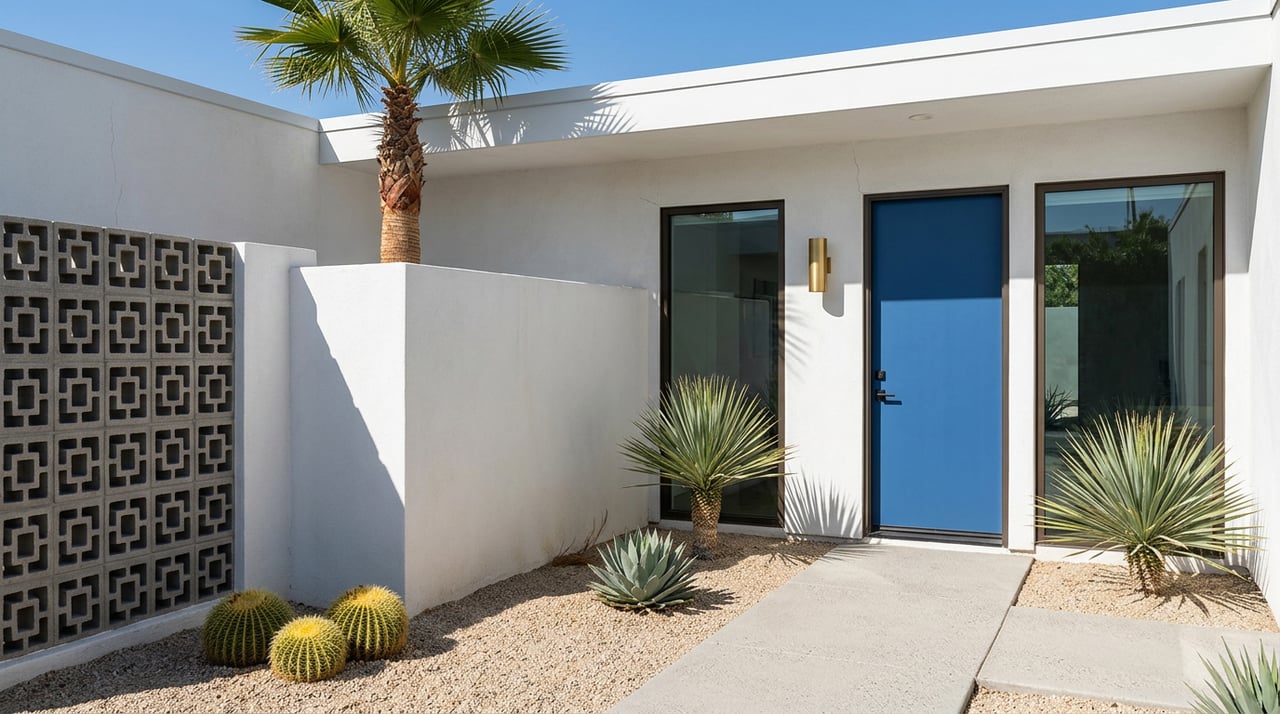
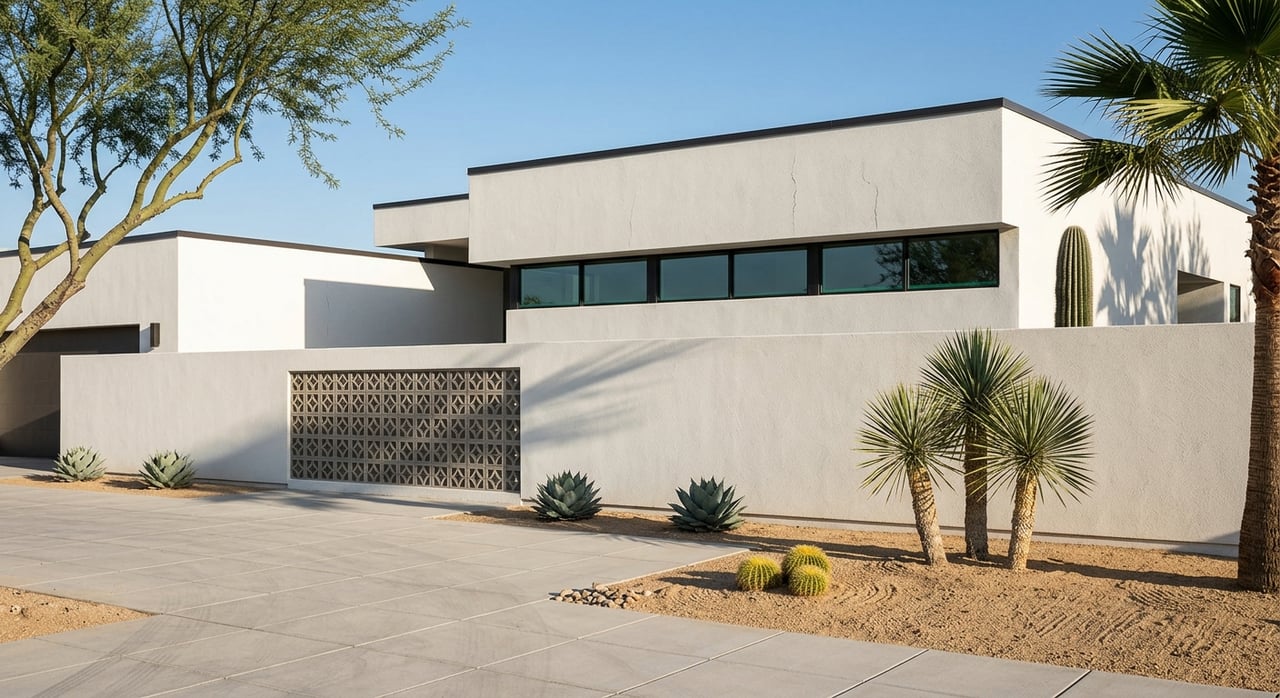
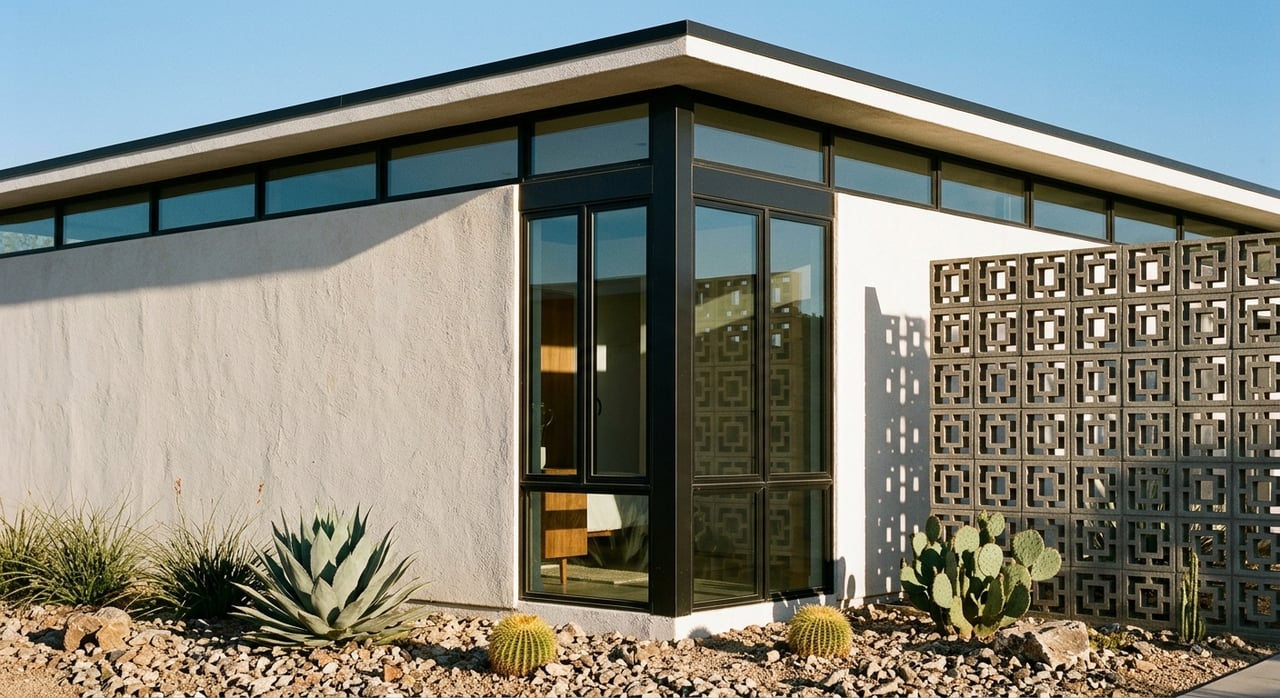
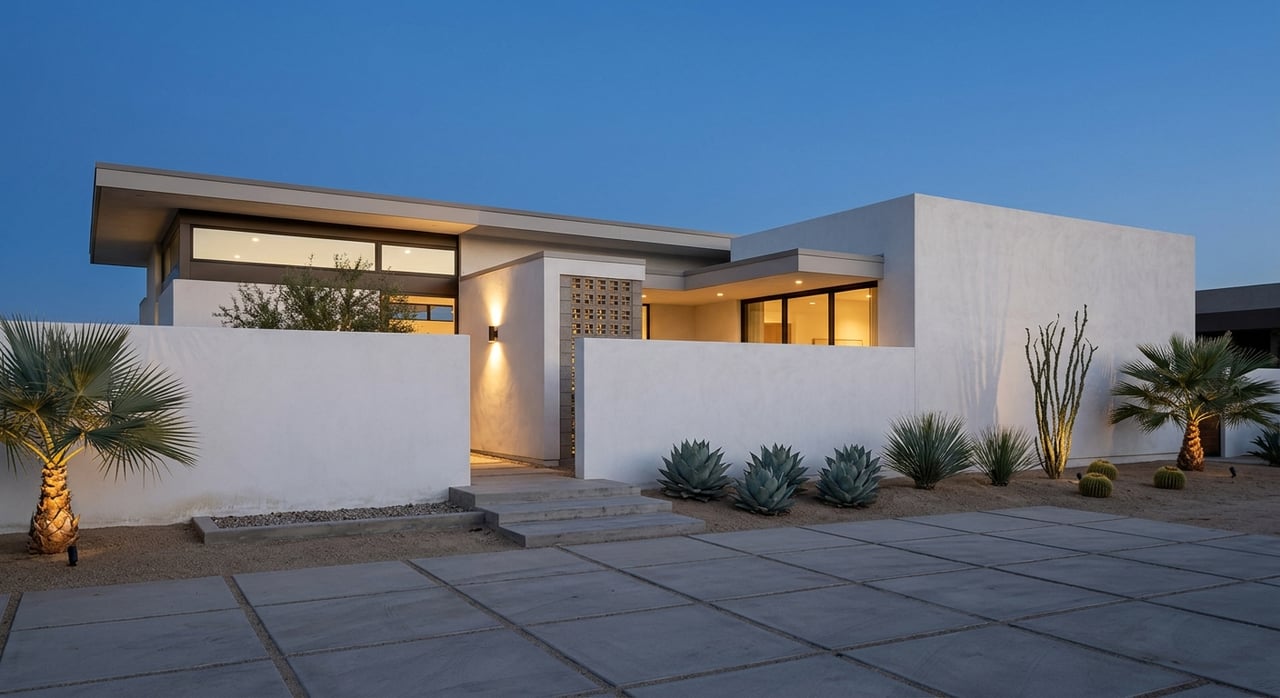
Look for flat or low‑slope roofs, long overhangs, and simple geometric forms. That low, calm roofline sits comfortably against the mountains and reads as distinctly Palm Springs. The effect is relaxed and resort‑like.
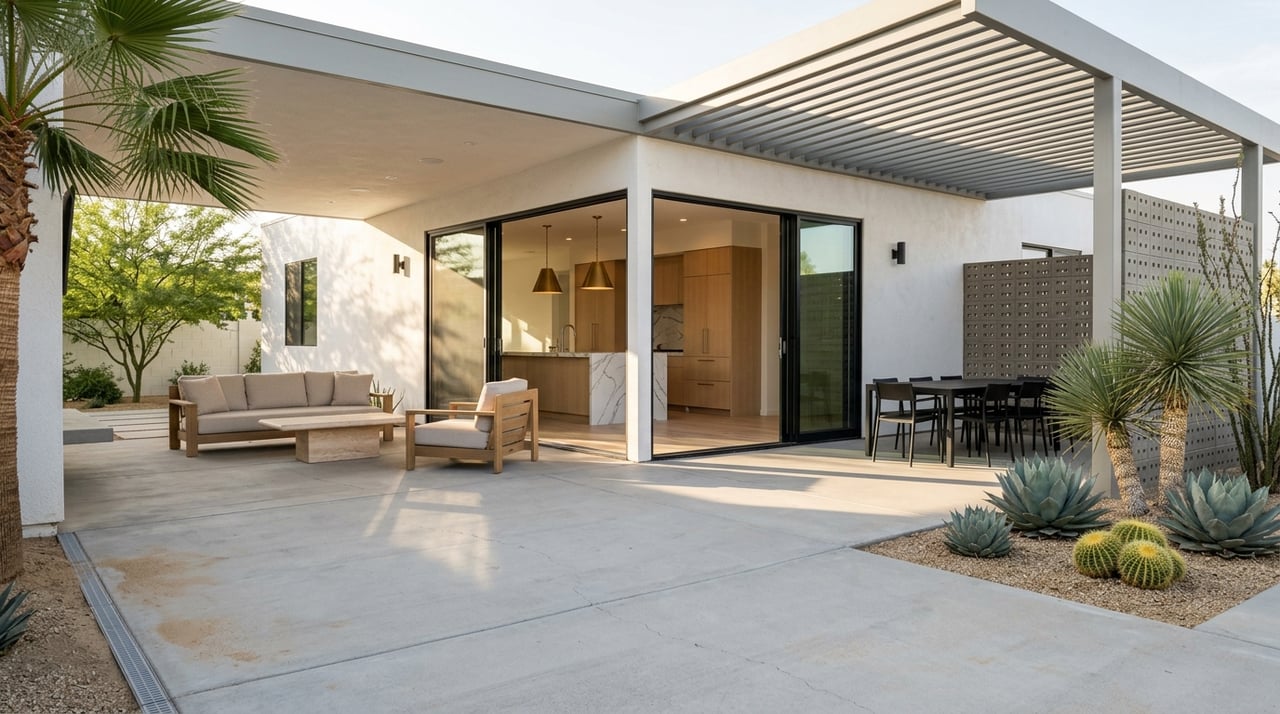
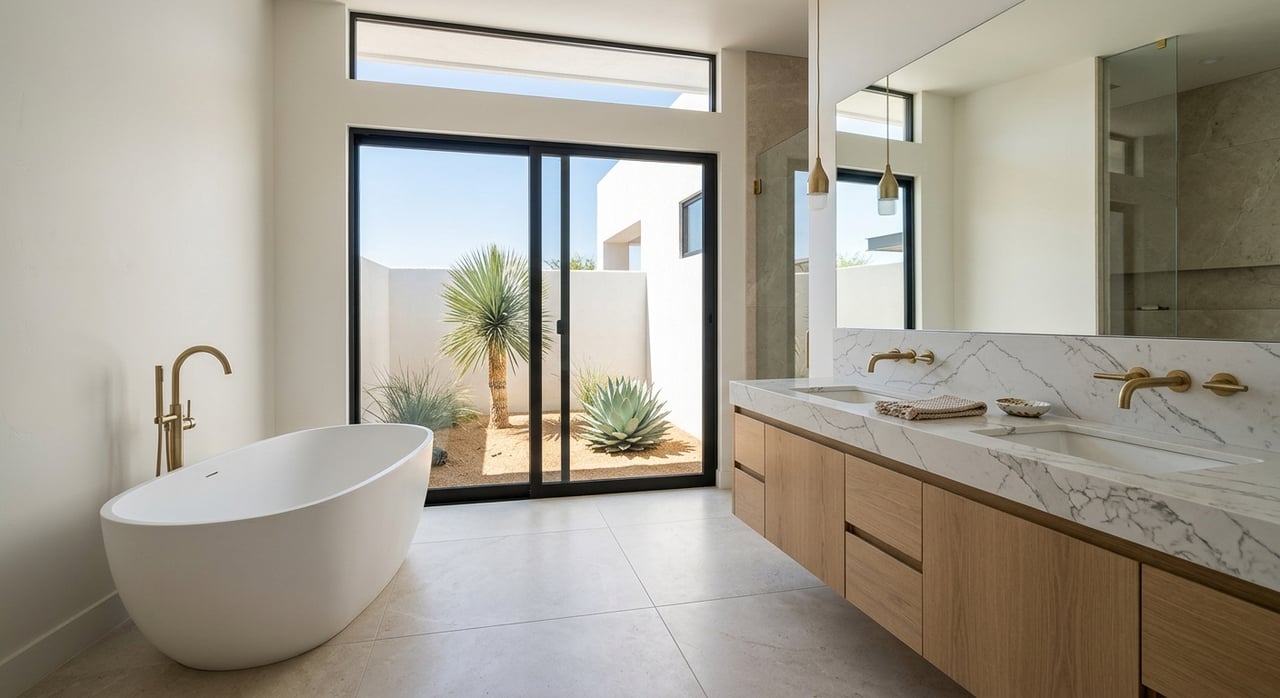
Desert modern plans often wrap around a pool or courtyard in U or L shapes. Large sliding glass walls dissolve the edge between living room and patio. Sightlines to water and mountains are intentional, so open those sliders and note how the space expands.
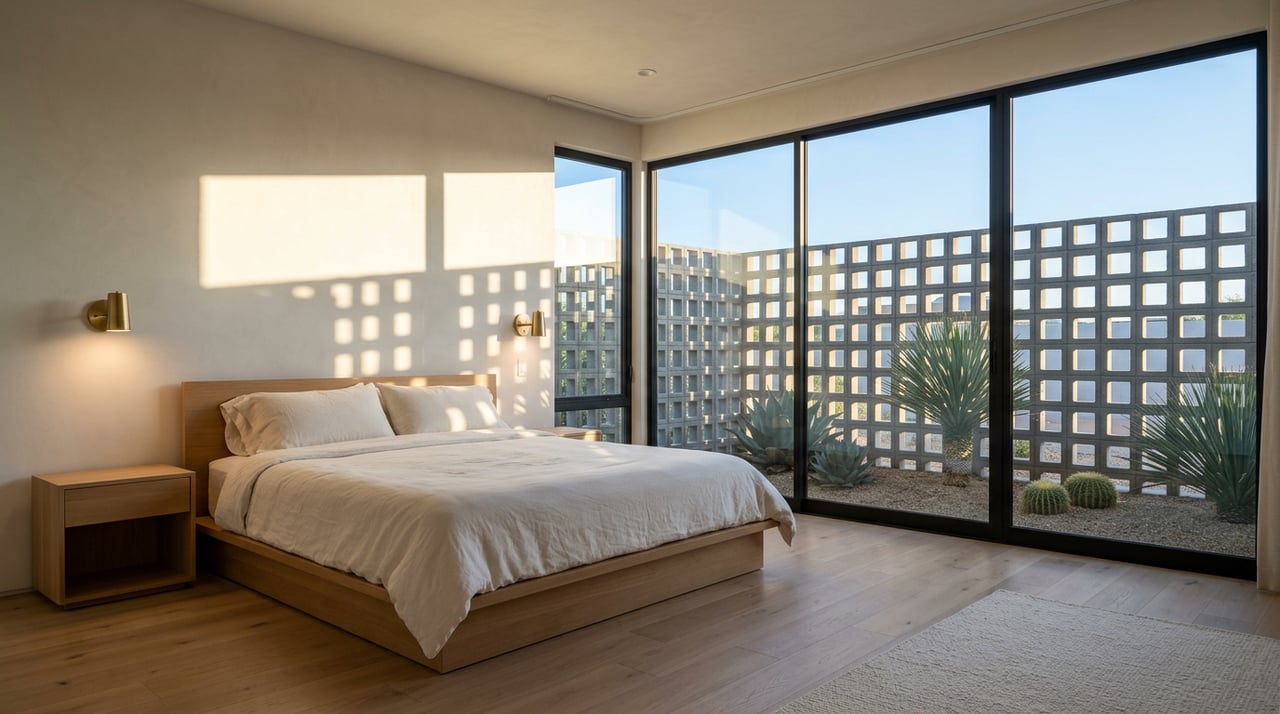
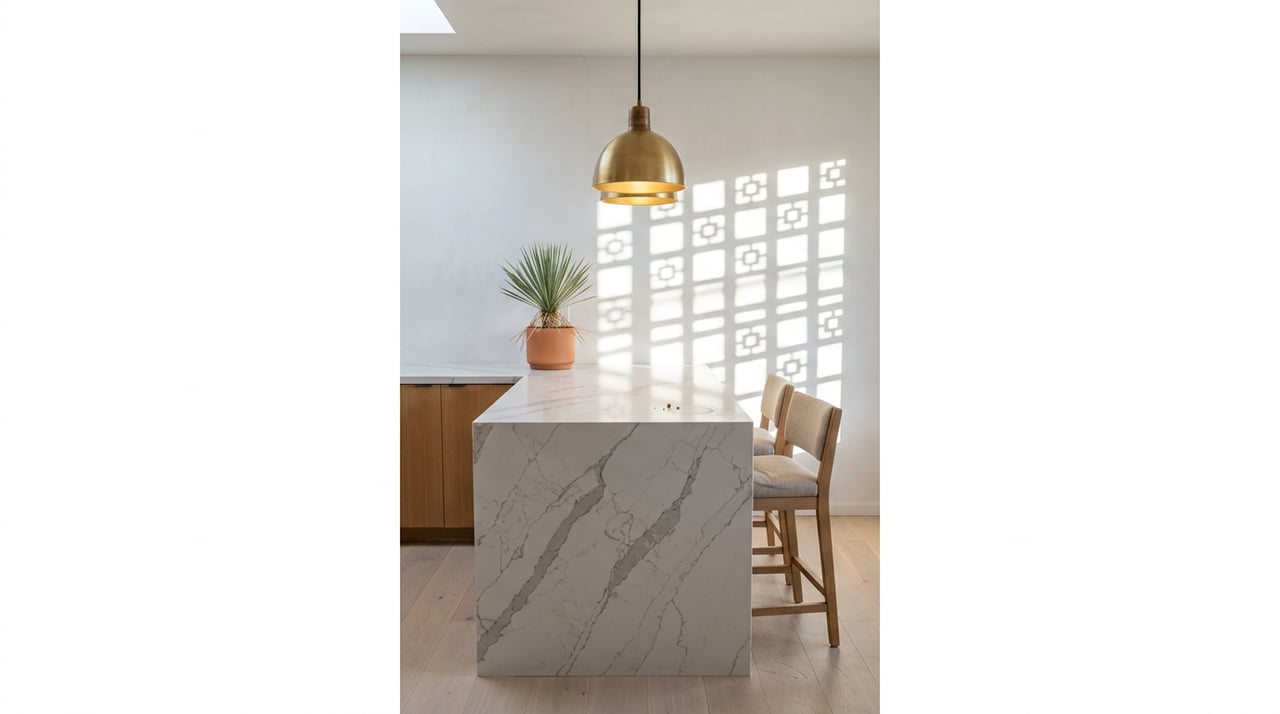
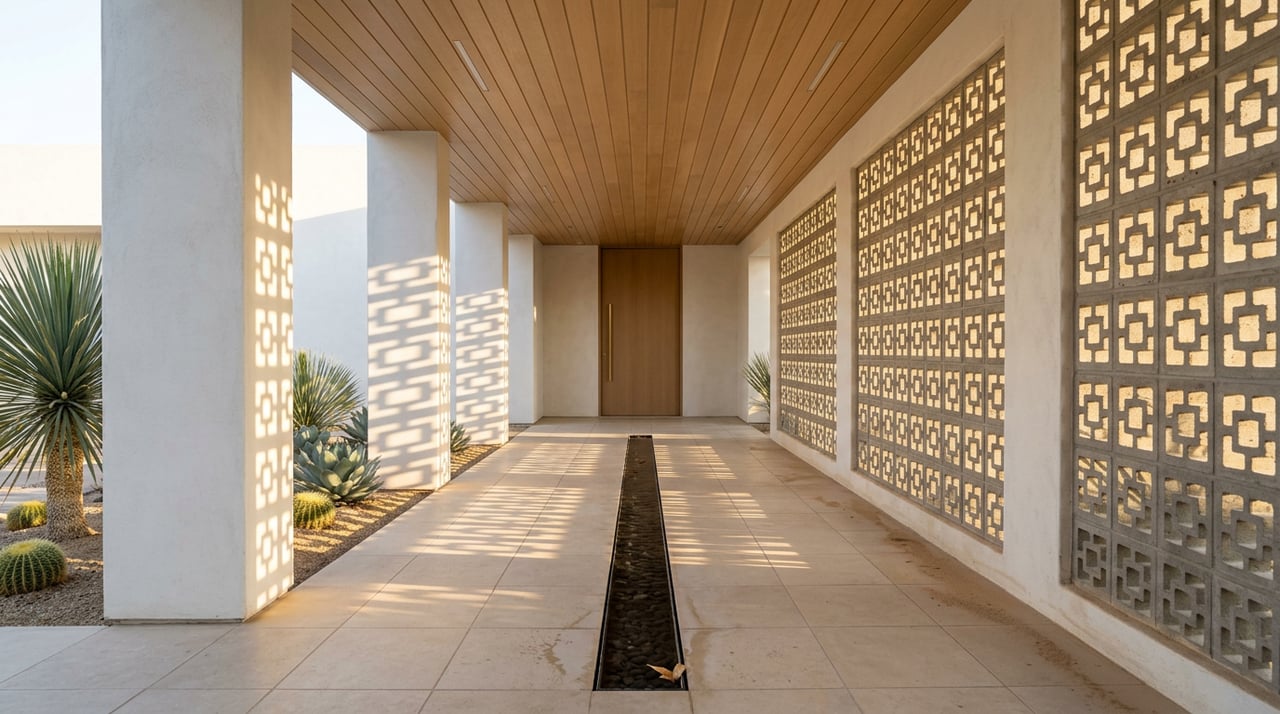
These homes embrace the sun without overheating. You’ll see deep eaves, clerestory windows (a high band of glass near the roofline), brise‑soleil (fixed sun screens), and decorative breeze‑block screens. Each element tempers glare, cools interiors, and creates photogenic patterns of light and shadow.
Many homes express structure with exposed post‑and‑beam or thin steel framing, which allows wide spans of glass. Materials are simple and honest: steel, glass, board‑formed concrete, natural stone, and stucco. Donald Wexler’s experimental light‑steel houses are a celebrated local example of pushing materials while staying minimal and efficient.
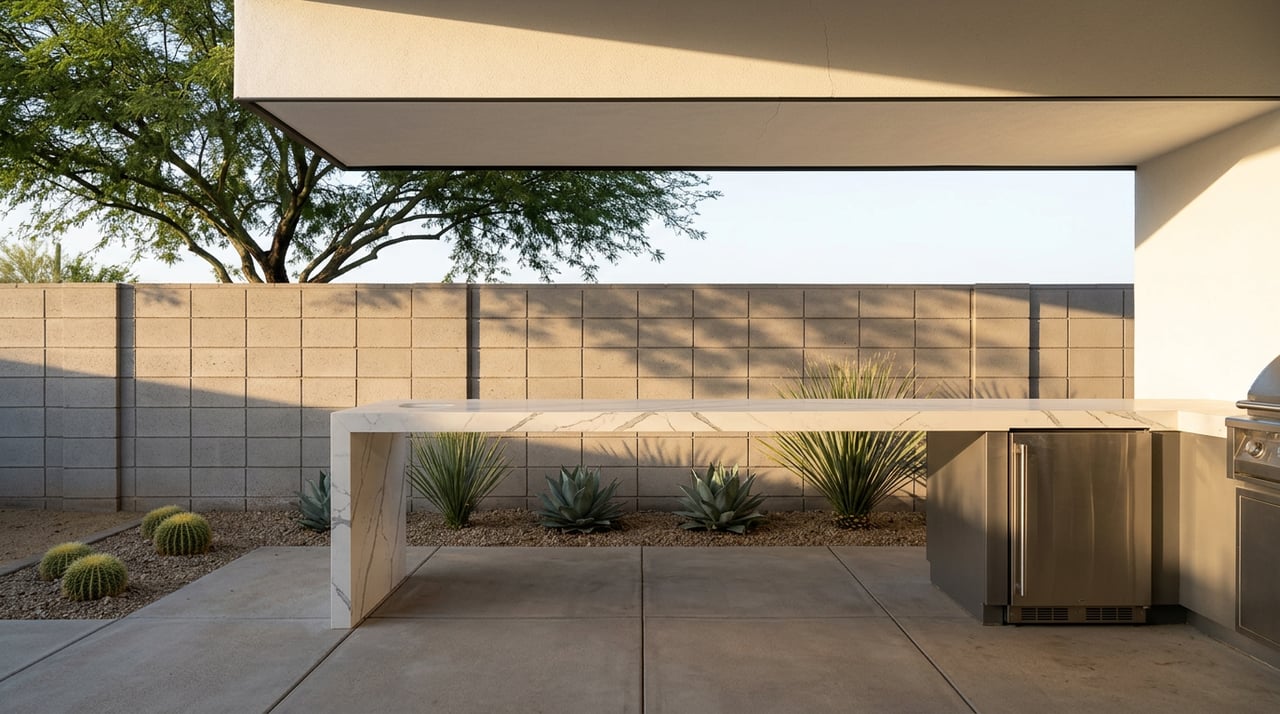
Outdoors is not an afterthought. Expect sculptural, drought‑tolerant planting, clean hardscape, and a rectilinear or kidney‑shaped pool that serves as the visual anchor. Patios, shade structures, and lighting define outdoor “rooms” that extend everyday living.
Palm Springs sits in a hot desert climate with more than 300 sunny days and roughly 4 to 5 inches of annual rain. Those facts explain so much of the style: wide overhangs, reflective or well‑drained flat roofs, and masonry floors that hold coolness overnight. Designers like Albert Frey calibrated shade and orientation to make glassy homes livable in intense sun.
If you’re considering an older example, plan for comfort upgrades that fit the architecture. Many buyers add high‑efficiency HVAC and thermally improved windows while preserving the slender sightlines that define the look. The goal is simple: keep what makes the home special while tuning performance for today.
Flat and low‑slope roofs deserve careful inspection. Membranes, flashings, scuppers, and valleys are specialized details that impact both comfort and resale. Budget accordingly and ask for documentation of recent roof work.
Original glass walls and sliders might be single‑pane with tired hardware. You can often upgrade to better performance without losing the lean look, but expect custom solutions. This is where a contractor familiar with mid‑century detailing earns their keep.
Where steel is exposed or used structurally, corrosion checks are smart. Wexler’s steel houses and similar systems rely on protective coatings and intact connections, so evaluate those conditions closely. Decorative breeze‑block can be tricky to match if damaged, and custom replacements may be needed. Also confirm waterproofing at patios and door thresholds near interior floors to avoid slow, costly moisture issues.
Staging should underscore the architecture, not compete with it. Keep the eye moving to long horizontal lines, the pool, and the mountain backdrop.
Publicized restorations featured during Modernism Week show how preservation plus thoughtful interiors can feel fresh without erasing character. Look to these case studies for cues on proportion, color restraint, and how to frame indoor–outdoor vignettes.
Ready to find or present a desert modern home at its best? Connect with a design‑informed advisor who understands both the architecture and the market. If you’re exploring next steps, reach out to Charles Gallagher for boutique, design‑first representation across the Coachella Valley.
Stay up to date on the latest real estate trends.
If you are seeking to buy, sell, or invest in real property, Charles invites you to engage in a conversation with him. Let's explore the possibility of embarking on this exciting journey together, where your goals and aspirations meet his expertise and unwavering passion.
Get in Touch With Charles to Learn More
CHARLES GALLAGHER | CA DRE# 02073898
Address 45000 Club Dr Indian Wells CA 92210