Cathedral City vs Palm Springs Homes for Your Desert Vision
May 14, 2026
May 14, 2026
Trying to choose between Cathedral City and Palm Springs? If you are searching for a desert home, that decision can shape your budget, your daily experience, and even the kind of property you can realistically buy. The good news is that both cities offer strong appeal, but they serve different priorities. This guide will help you compare price, inventory, home styles, and lifestyle so you can zero in on the desert vision that fits you best. Let’s dive in.
At a high level, Palm Springs is the more iconic, architecture-forward choice, while Cathedral City is often the more budget-conscious path into the Coachella Valley. That does not make one better than the other. It means your best fit depends on whether you are prioritizing design identity, entry price, inventory depth, or overall space.
Current market snapshots reflect that split clearly. In March 2026, Redfin reported a median sale price of $610,000 in Palm Springs and $543,000 in Cathedral City. Realtor.com also showed a higher median list price and price per square foot in Palm Springs, with Palm Springs at $730,000 and $455 per square foot, compared with Cathedral City at $517,000 and $297 per square foot.
If your search starts with value, Cathedral City may feel more approachable. The city currently presents a lower entry point based on both median sale price and median list price. For many buyers, that can translate into more options within a set budget or the chance to prioritize size, lot, or flexibility.
Palm Springs, on the other hand, offers a higher-priced market with more active inventory. Current snapshots show about 1,200 homes for sale in Palm Springs versus about 580 in Cathedral City. Median days on market were also slightly shorter in Palm Springs at 53 days, compared with 63 days in Cathedral City.
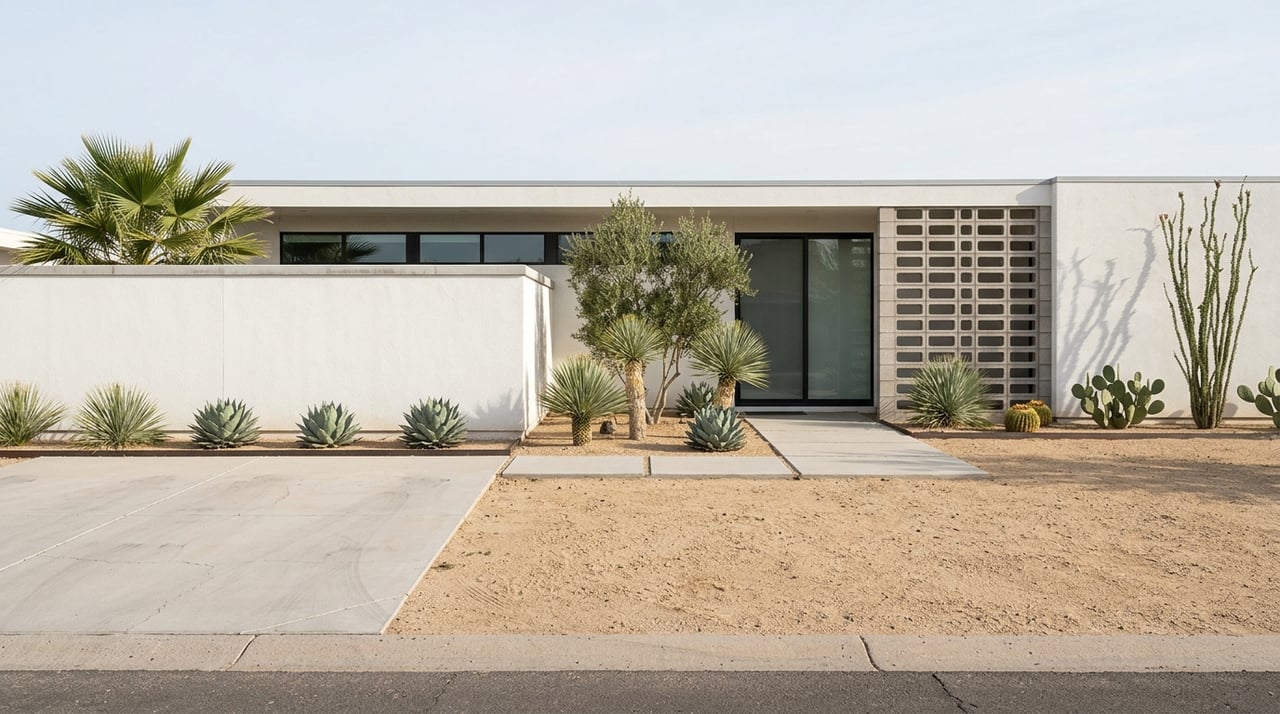
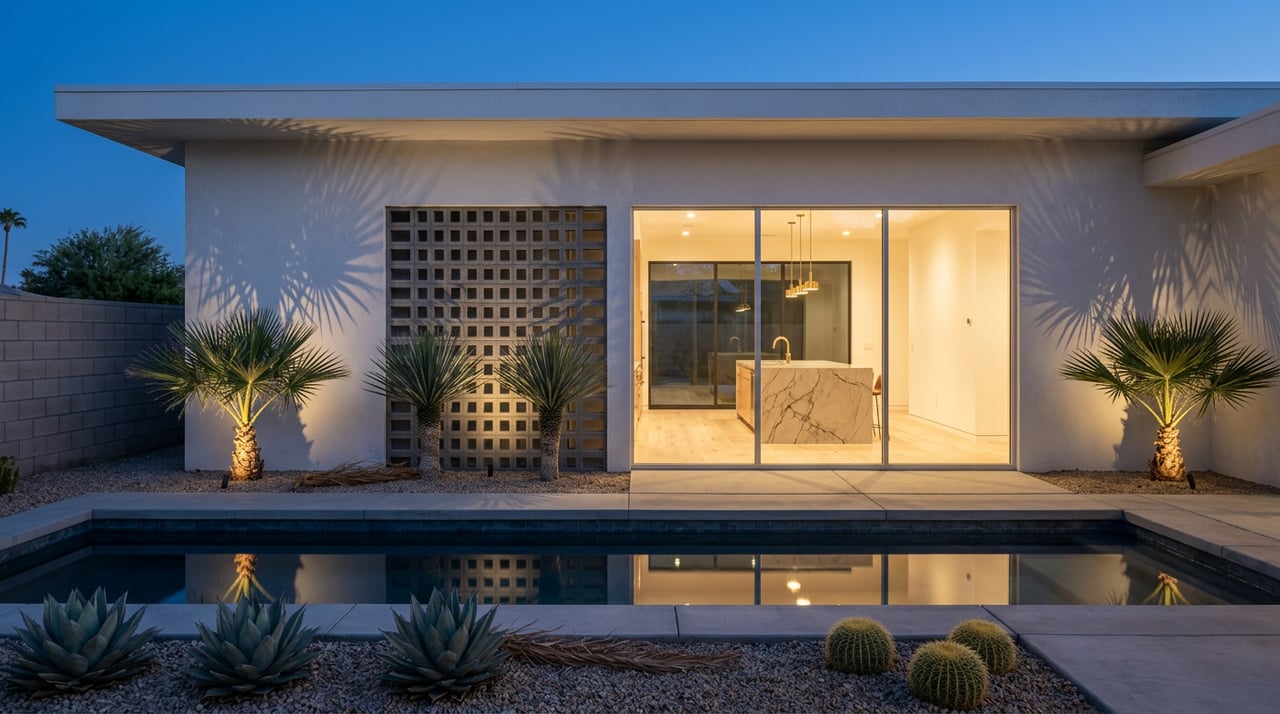
Palm Springs has a stronger architectural identity. The city’s planning documents emphasize high-quality architecture, desert-responsive materials, and distinct neighborhood identity. It is especially well known for mid-century modern homes, and official destination materials consistently spotlight design as part of the Palm Springs experience.
Cathedral City has a more varied housing mix. Its planning framework includes estate, low-density, resort residential, medium-density, high-density, and mixed-use residential categories. The city’s North City Specific Plan also contemplates attached and detached homes, rowhouses, townhomes, stacked flats, and live/work formats, which points to a broader range of housing types.
If the home itself is central to your vision, Palm Springs often stands out more clearly. Neighborhoods commonly associated with mid-century and modernist homes include Twin Palms, Vista Las Palmas, Racquet Club Estates, Indian Canyons, Deepwell Estates, The Mesa, Old Las Palmas, and Warm Sands. For buyers who care deeply about design language, that concentration can matter.
Cathedral City offers a different kind of opportunity. Its broader style palette can make it easier to find a home with more flexibility by price band, lot size, or future update potential. The city’s pre-approved ADU program, which includes Mediterranean and Desert Modern plan sets, also reflects that wider design range.
Choosing a home is not just about the house. It is also about what daily life feels like once you are there.
Palm Springs reads as more visitor-facing and design-forward in its public identity. Official materials highlight boutique hotels, architecture, local businesses, arts, museums, outdoor activities, shopping, nightlife, and year-round events. The city also has 52 recognized neighborhood organizations, which suggests that micro-neighborhood choice can be a meaningful part of your search.
Cathedral City presents more as a resident-centered environment with its own arts and recreation core. Official city and destination pages highlight hometown charm, scenic desert landscapes, golf courses, recreational facilities, the Downtown Arts and Entertainment District, the amphitheater, festivals, and Desert Recreation District programming. If you want a community feel with practical day-to-day livability, that can be an important difference.
Geography shapes how a city feels, even before you tour homes. Census QuickFacts report 45,453 residents across 94.55 square miles in Palm Springs and 52,517 residents across 22.49 square miles in Cathedral City. That works out to roughly 481 people per square mile in Palm Springs versus about 2,335 in Cathedral City.
In simple terms, Palm Springs is more geographically spread out, while Cathedral City feels more compact and continuous. If you like the idea of a more expansive city footprint with distinct pockets and neighborhood personalities, Palm Springs may align better. If you prefer a city that feels more connected and efficient to navigate, Cathedral City may suit you.
The best choice often becomes clearer when you frame the decision around how you plan to use the property.
If you want a lower-maintenance second home, Palm Springs currently offers the deeper condo inventory. Redfin snapshots show 378 condos for sale in Palm Springs at a median listing price of $419,000, compared with 98 condos in Cathedral City at a median listing price of $300,000.
That gives Palm Springs an edge for buyers who want more condo choices and a stronger design-driven brand. Cathedral City, however, may be more appealing if your main goal is finding a condo at a lower price point.
If you picture a design-forward home where architecture plays a big role in the experience, Palm Springs is often the clearer fit. Its best-known neighborhoods are closely tied to mid-century and modernist homes, making it a natural target for buyers who value design pedigree and visual character.
Cathedral City can be compelling if you want more house or more lot for your money. That broader space-to-budget tradeoff may also appeal if you are open to updates or want room to personalize the property over time.
Palm Springs has the more clearly branded hillside and elevated neighborhoods. Andreas Hills, Little Tuscany, The Mesa, and Old Las Palmas are often part of that conversation, and buyers who want a view-oriented search tend to have a more defined map in Palm Springs.
Cathedral City does stretch from the Santa Rosa Mountain foothills to Edom Hill and the Indio Hills, but much of the city sits on the valley floor. In practice, that means view opportunities may be more property-specific rather than a defining feature of the city as a whole.
If you are torn, start with the one question that matters most to you: Do you want the iconic Palm Springs brand, or do you want the strongest space-to-budget value? That answer will usually point you in the right direction.
Choose Palm Springs if your vision includes recognizable desert architecture, a broader selection of homes and condos, and a location where design identity is part of the appeal. Choose Cathedral City if your vision is more about value, flexibility, and getting more room to work with at a lower price point.
For many buyers, the right strategy is not to pick one city too early. It is to compare both side by side, narrow your must-haves, and evaluate whether your ideal desert lifestyle is more architecture-first or budget-first.
In a market where presentation, layout, and neighborhood context can all affect value, a focused local search matters. If you want help weighing Palm Springs against Cathedral City and identifying the properties that truly fit your goals, connect with Charles Gallagher for thoughtful, design-informed guidance across the Coachella Valley.
Stay up to date on the latest real estate trends.
If you are seeking to buy, sell, or invest in real property, the Gallagher Group invites you to engage in a conversation with them. Let's explore the possibility of embarking on this exciting journey together, where your goals and aspirations meet their expertise and unwavering passion.
Get in Touch With Us to Learn More
Address 45000 Club Dr Indian Wells CA 92210