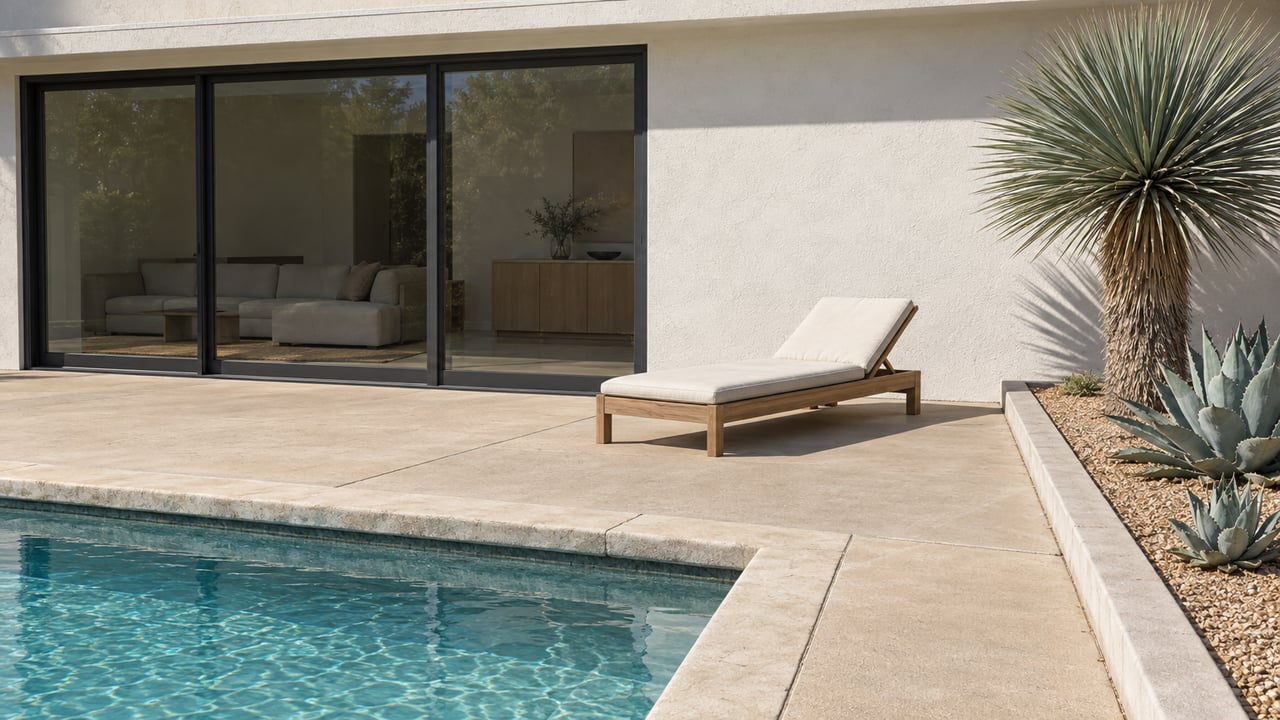
In Palm Springs, the Vacation Rental Permit Doesn't Come With the House
October 22, 2026
October 22, 2026
A Palm Springs vacation rental certificate belongs to the owner, and it ends when ownership changes. The city's vacation rental ordinance, Chapter 5.25 of the municipal code, says that when a property changes hands, "the registration certificate shall expire." The home cannot be rented short term again until the new owner is issued a certificate of their own. A listing can show three years of bookings, five-star reviews and a full calendar for next season. None of it transfers at closing.
In most of the city, that is a paperwork step. In a handful of neighborhoods, it decides whether the buyer can rent the home at all. Those neighborhoods include several with the mid-century streetscapes that bring many second-home buyers to Palm Springs in the first place.
The city's vacation rental FAQ and the code set out the order of events:
The waitlist form states that a place on the list is not permission to rent. The buyer cannot apply until after closing, so whether the home can be rented is only settled once the purchase is final.
The cap comes from Ordinance No. 2075, adopted November 28, 2022. It limits vacation rentals to 20% of the residential units in each organized neighborhood. Existing certificates were grandfathered, and no new ones are issued once a neighborhood reaches the cap. The current code still sets the cap at 20%, and the City Council can change it.
The city publishes a neighborhood percentage table. As of October 15, 2026, these neighborhoods were at the cap or close to it:
| Organized neighborhood | Registered rentals / total units | Current share | Waitlist |
|---|---|---|---|
| Racquet Club Estates | 172 / 537 | 32.03% | 35 |
| Sunmor | 35 / 140 | 25.00% | 11 |
| El Rancho Vista Estates | 24 / 112 | 21.43% | 6 |
| Desert Park Estates | 93 / 465 | 20.00% | 19 |
| Gene Autry | 115 / 580 | 19.83%, projected 20.00% | 1 |
| El Mirador | 31 / 157 | 19.75% | 12 |
| Movie Colony East | 144 / 743 | 19.38%, projected 19.52% | 14 |
| Ranch Club Estates | 76 / 409 | 18.58% | 0 |
| Vista Las Palmas | 72 / 397 | 18.39% | 0 |
The percentages hide how far each neighborhood is from reopening. In Racquet Club Estates, 20% of 537 units is about 107 rentals. The neighborhood had 172 on October 15, so roughly 65 certificates would have to lapse before the city issues a new one, and 35 applicants are already waiting. Sunmor would need to lose about eight. El Mirador is under the cap but has no room: one more registration on 157 units would take it past 20%, and 12 applicants are waiting there.
The table also shows waitlists in neighborhoods below 20%. El Mirador and Movie Colony East are both under the line, and both have applicants waiting. In those places, being under the cap does not mean a new owner can apply and start renting. A buyer joins the end of the existing list.
Ranch Club Estates and Vista Las Palmas are about a point and a half below the cap, with no waitlist on October 15. Other buyers' purchases between now and a future closing date can change that.
Across the city, short-term rentals are declining. The Palm Springs Post reported 2,777 registered rentals in October 2025, down from a peak of 2,927 in June 2024. The city's October 15, 2026 table shows 2,607 across 35,159 residential units, or 7.41% of the housing stock. That is about 320 fewer rentals than the 2024 peak.
The cap applies neighborhood by neighborhood, not to the city as a whole. A rental that closes in Warm Sands, at 4.18%, does nothing for a buyer on the Racquet Club Estates waitlist. Several neighborhoods have no registered rentals at all, including Escena, Four Seasons, Mountain Gate and Rimrock. Supply is falling citywide while the limits stay tight in exactly the places where rental demand built up.
For a buyer comparing two similar homes in two different neighborhoods, the neighborhood a house sits in can matter as much as the house itself. Rental potential depends on which organized neighborhood the home is in and on that neighborhood's line in the table on the week the buyer applies.
Rentals in uncapped neighborhoods have their own limit, and it depends on whether the property had a certificate or a complete application on file by October 17, 2022. Under the code, new permittees may have no more than 26 contracts per calendar year. "Existing permittees" get 32, plus up to four more for stays that fall entirely within the third quarter. The code defines an existing permittee as "a property for which a vacation rental registration certificate has been issued, or for which a complete application has been filed with the city, on or before October 17, 2022."
That higher limit was scheduled to fall to 26 after December 31, 2025. The Palm Springs Post reported that in October 2025 the City Council voted to remove the scheduled reduction, keeping legacy rentals at 36 while newer permits stay at 26.
A stay counts against the limit whatever its length. The code counts any occupancy by people other than the owner, without the owner present, as a contract, whether or not money changes hands. The code also lets the owner file the names of up to five people who may stay at no cost without the owner present, outside the contract limit. For paying guests, twenty-six two-night weekends use up the year the same way twenty-six week-long stays do.
How this applies after a sale is not clear. The definition attaches legacy status to the property, but the certificate itself expires when ownership changes. Meanwhile, the city's vacation rental FAQ, which the city's vacation rental information page dates 8.13.26, says owners are limited to 26 contracts per year. A buyer whose numbers depend on 36 bookings rather than 26 should get the city's answer for that address in writing before removing contingencies.
Ordinance 2133, adopted July 8, 2026, made several changes that affect a sale directly.
There are also ongoing costs. Under the fee schedule effective December 1, 2025, a new or annual vacation rental registration costs $1,046. The city lists transient occupancy tax at 11.5%, plus a 1% TBID assessment on short stays, and owners must file monthly returns even in months with no rentals.
Does a 30-night lease need a certificate? The city's FAQ says stays of 28 days or fewer require a certificate, and stays of 29 days or longer are not regulated by the vacation rental ordinance. By the FAQ's terms, that includes homes in capped neighborhoods such as Racquet Club Estates or Sunmor. Confirm how a specific lease is treated with the city before you rely on it.
When does a buyer's place in line start? The city tells buyers to wait until escrow closes and to have a file-stamped grant deed before applying for a certificate. The waitlist instructions base priority on the date a complete application was submitted, so ask the city's vacation rental office how that date is set for a home still in escrow.
Will the October numbers hold until my closing? The table is a snapshot dated October 15, 2026, and figures for the neighborhoods near the line can change with a single registration. Check the current table the week you write an offer.
This post is general information about city rules, not legal, tax or financial advice. Confirm how the ordinance applies to a specific property with the City of Palm Springs and your own attorney or tax advisor.
If rental income is part of the reason you're looking in Palm Springs, the city's density table should be on your list before you shortlist homes. Charles Gallagher can check each home's organized neighborhood against the current table and build your offer timeline around the certificate that has to be issued after closing. Let's Connect.
Stay up to date on the latest real estate trends.
If you are seeking to buy, sell, or invest in real property, the Gallagher Group invites you to engage in a conversation with them. Let's explore the possibility of embarking on this exciting journey together, where your goals and aspirations meet their expertise and unwavering passion.
Get in Touch With Charles to Learn More

Address 45000 Club Dr Indian Wells CA 92210